
Search Illinois Divorce Records
Illinois divorce records are public court documents maintained by the Circuit Court Clerk in the county where the dissolution of marriage was filed. To get a certified copy of an Illinois divorce decree, you must contact the clerk in the right county. The Illinois Department of Public Health keeps a separate index for basic verifications only. This page covers how to search Illinois divorce records, which offices hold them, what ID you need, and how the process works across the state's 102 counties and 24 judicial circuits.
Illinois Divorce Records Quick Facts
Where Illinois Divorce Records Are Kept
The Illinois Department of Public Health, Division of Vital Records, does not issue certified copies of dissolution of marriage records. That is a key distinction in Illinois. Certified copies come only from the circuit court clerk in the county where the divorce was granted. The IDPH office at 925 E. Ridgely Ave. in Springfield handles verifications, not full copies. If you need an actual certified divorce decree, you must go to the county. The IDPH can verify basic facts for divorces indexed from 1962 to the present. Those facts include the names of both parties, dates of birth, the date of the dissolution, and the city or county where it took place.
Illinois has 102 counties, each served by its own elected Circuit Court Clerk. The clerks maintain all case records under the authority of 410 ILCS 535, the Vital Records Act, and under 750 ILCS 5, the Illinois Marriage and Dissolution of Marriage Act. These clerks store the divorce petition, the answer, all motions, settlement agreements, and the final decree. Each file is tied to the county where the case was heard, not where the parties currently live.
The IDPH dissolution of marriage records page explains the full scope of what the state office can and cannot do. Most people who need a certified divorce decree will need to contact their county circuit clerk directly.
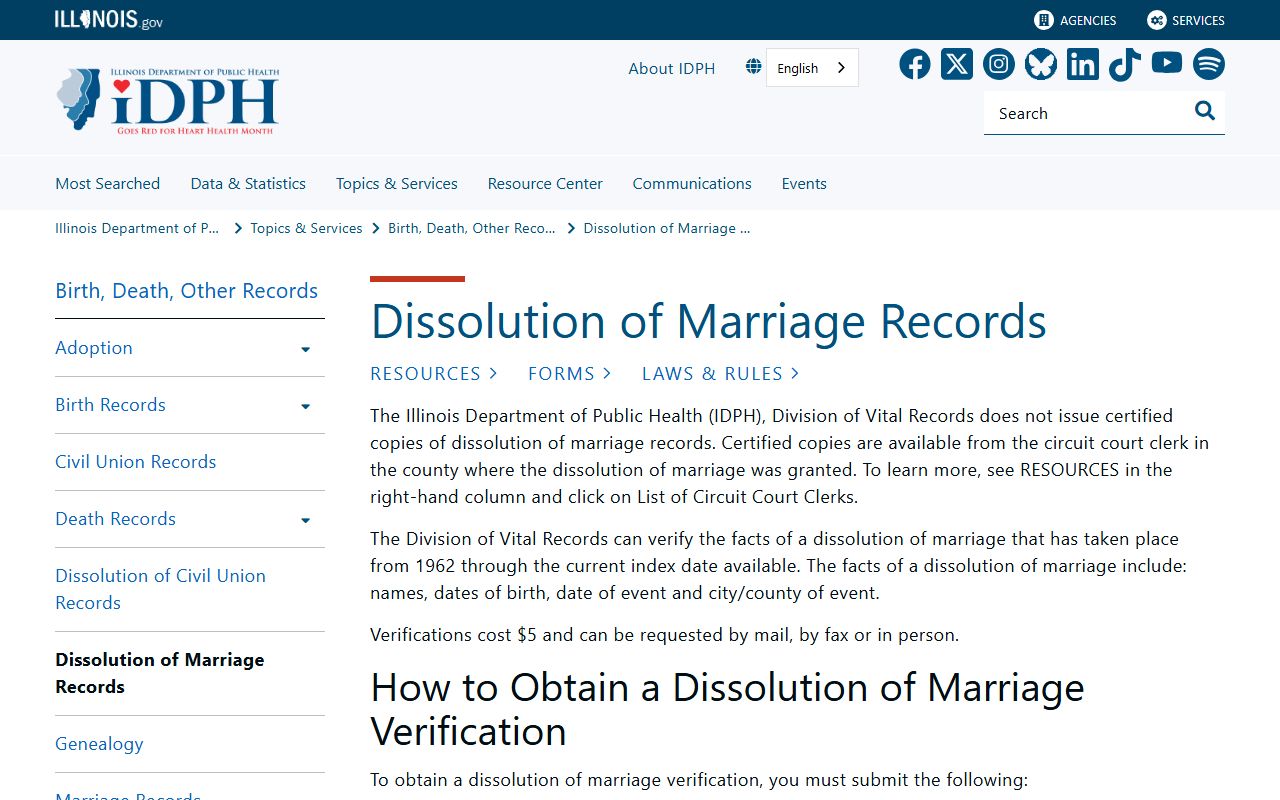
The IDPH state information page lays out the verification process clearly. It also links to the required application form and explains what ID you need to include with your request.
How to Get Illinois Divorce Records
Getting a certified copy of an Illinois divorce decree requires you to contact the county where the divorce was filed. Each Circuit Court Clerk has their own process, but most accept in-person requests, mail requests, and in some cases online requests. If you visit in person, bring a valid government-issued photo ID and the name of at least one party or the case number. Staff can search by name or case number and pull the file. Certified copies cost more than plain copies and require the clerk's seal to be considered official.
The Illinois Courts website lists every circuit court clerk in the state with contact information. You can also find clerks sorted by judicial district and circuit at the circuit clerk directory by district and circuit. Illinois courts are organized into 24 judicial circuits. Each clerk handles records for all cases in their county. Cook County, which covers Chicago and its suburbs, has one of the largest court systems in the country and maintains its own online portal at cookcountyclerkofcourt.org.
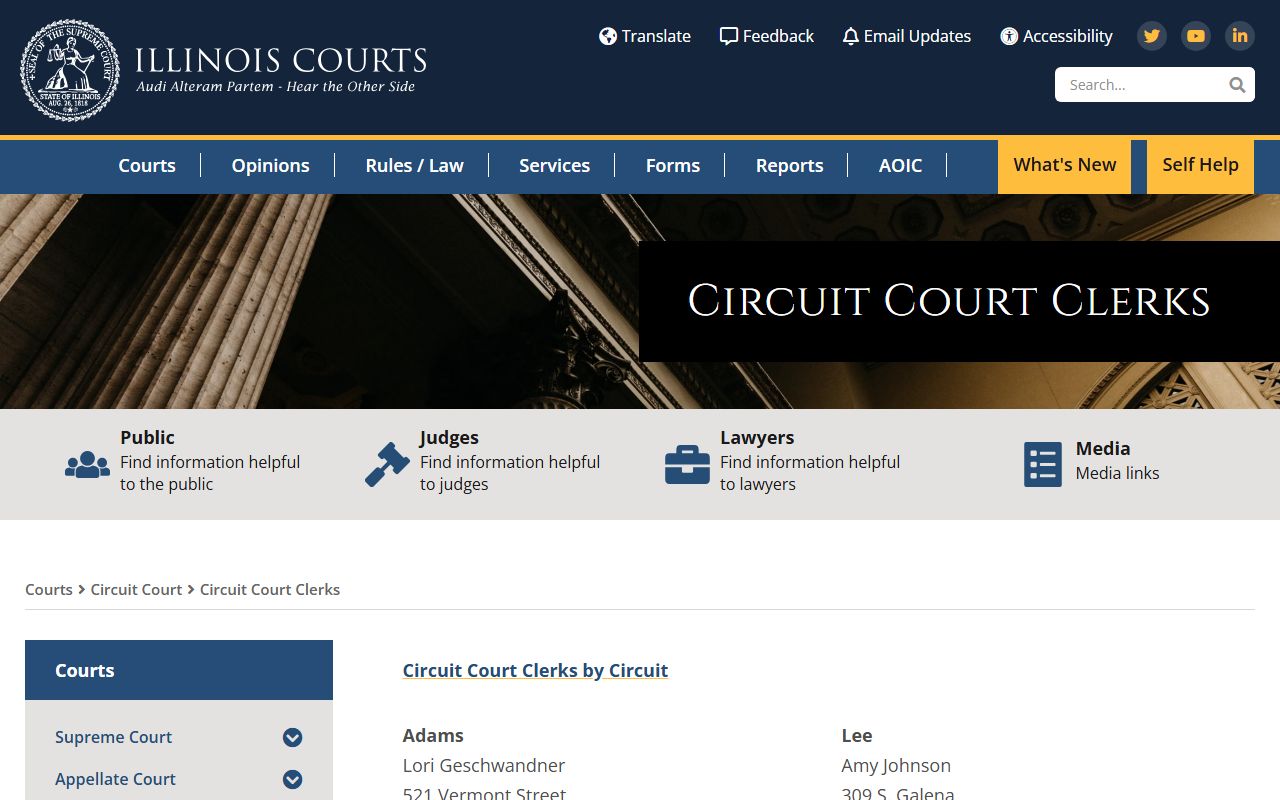
The courts directory shows all 102 county clerks. Use it to find the phone number, mailing address, and website for the county you need. Response times for mail requests vary by county and how busy the office is.
Note: If you are not sure which county handled the divorce, start by checking the county where the couple lived at the time of the filing. Illinois law requires filing in the county where one of the spouses resides.
Illinois Dissolution of Marriage Law
Divorce in Illinois is governed by the Illinois Marriage and Dissolution of Marriage Act, codified at 750 ILCS 5. This act covers how marriages end, how courts divide property, and how support and parental responsibilities are handled. Illinois uses a pure no-fault system. Under 750 ILCS 5/401, the sole ground for dissolution is irreconcilable differences. The court must find that the marriage has broken down with no reasonable prospect of reconciliation. No separation period is required before filing in Illinois.
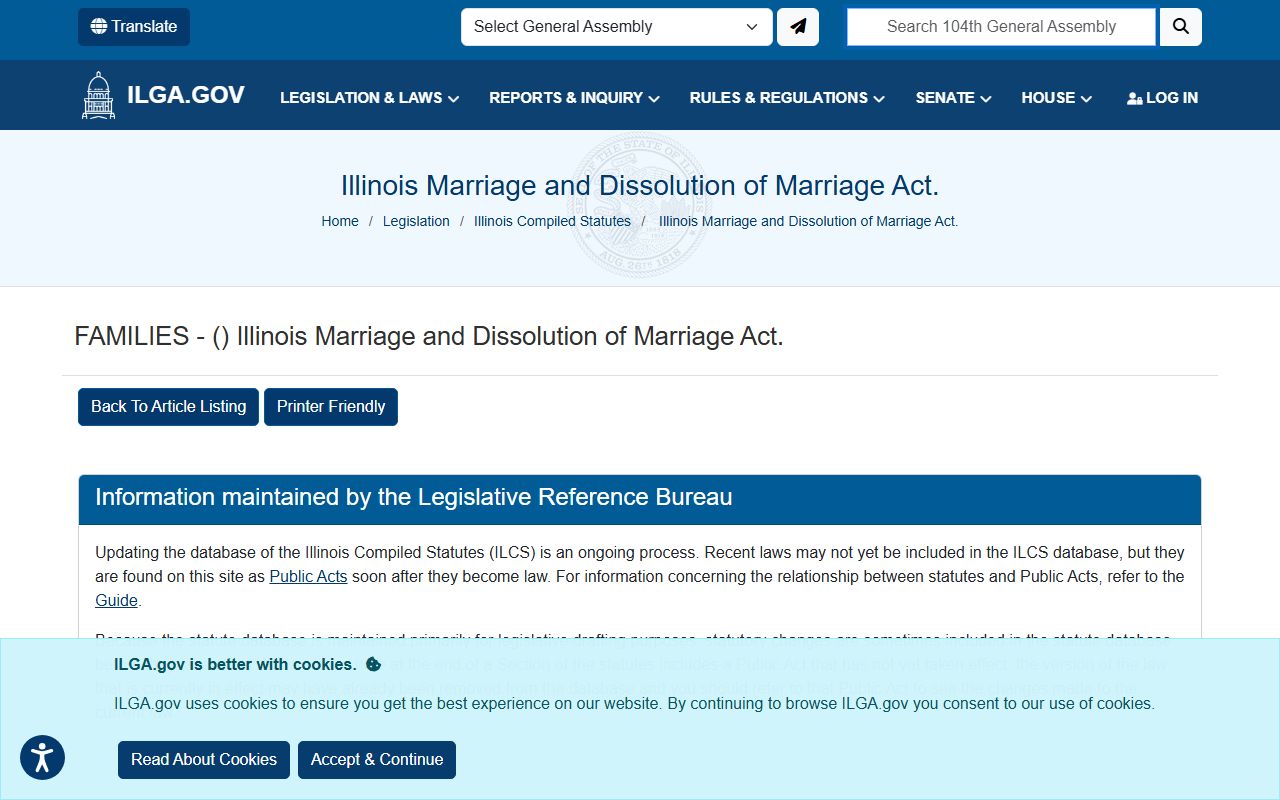
The statute page on the Illinois General Assembly website shows the full text of the IMDMA. Sections covering the filing process, residency requirements, and grounds for dissolution are all accessible there.
Under 750 ILCS 5/413, at least one spouse must have been an Illinois resident for 90 days before filing. This is a shorter wait than many other states require. 750 ILCS 5/411 sets out how to start an action for dissolution: you file a petition with the circuit court clerk, pay the filing fee, and serve your spouse. All of these steps create records that become part of the public case file. The final decree, property orders, support terms, and parenting plans are all part of the public record in Illinois.
IDPH Divorce Record Verifications
The Illinois Department of Public Health can verify facts about divorces that took place from 1962 through the current index date. This is different from a certified copy of the actual court record. A verification only confirms basic facts: the names of the parties, their dates of birth, the date of the dissolution, and the city or county where it occurred. Verifications cost $5 per request. You can order additional copies at the same time for $5 each. Requests go to the Division of Vital Records at 925 E. Ridgely Ave., Springfield, IL 62702-2737. You can reach the office at (217) 782-6553 or by fax at (217) 523-2648.
The IDPH vital records portal is where you can access information about what the state office offers. It covers marriage, birth, death, and dissolution records, though only the county clerks issue certified copies for divorces.
Mail requests take an average of 4 to 6 weeks to process. That time does not include delivery. Do not send cash. Payments must be check or money order made payable to "Illinois Department of Public Health." Include the completed application for verification of dissolution of marriage records with your payment and a copy of your valid photo ID.
Note: If the request lacks a readable, valid ID, the IDPH will return it unprocessed. Make sure your ID is current and legible before submitting by mail or fax.
What You Need to Request Divorce Records
All requests to the IDPH for dissolution of marriage verifications require a valid government-issued photo identification. The ID must be readable and not expired. If the ID is unreadable or out of date, the IDPH will return your request without processing it. The IDPH valid ID page lists which forms of identification are accepted. Common examples include a driver's license, state ID card, or passport. Most county circuit clerk offices have similar ID requirements for in-person record requests.
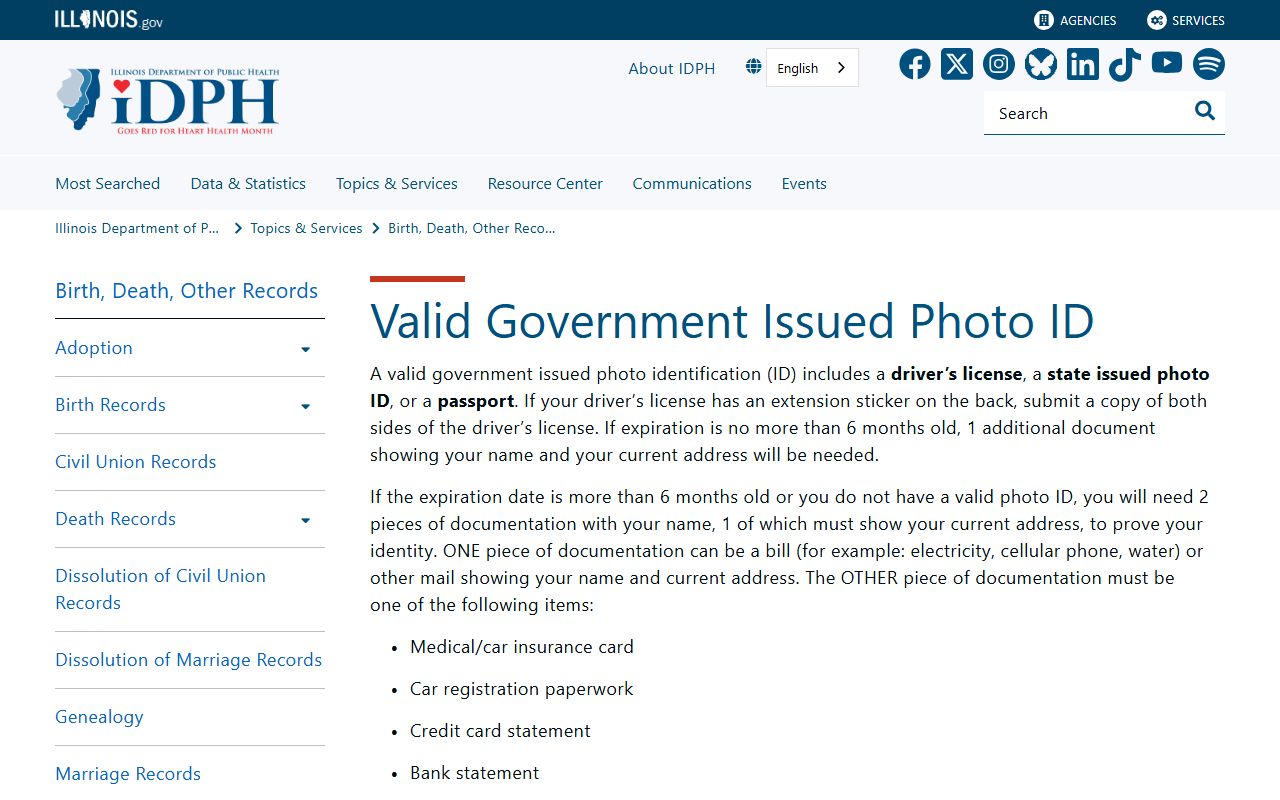
The valid ID requirements page explains exactly what is acceptable and what is not. Check it before submitting a mail request so your application is not returned.
To search for a divorce record at a county clerk's office, you typically need the full name of at least one party, the approximate year of the divorce, and the county where it was filed. A case number, if you have it, speeds up the search. Some county offices can also search by date range or by both party names. Call the clerk before visiting to ask what information they need and what fees apply for copies.
Historical Illinois Divorce Records
For divorces before 1962, the state index does not apply. Pre-1962 records are held by the county circuit courts where the divorce was filed. Many counties have records going back to the 1800s. The Illinois State Archives at the Capitol Complex in Springfield holds historical records dating back to 1763. You can reach the archives at (217) 782-4682. Historical divorce records from that era can help with genealogy research and family history. The Illinois State Genealogical Society at ilgensoc.org has additional resources for tracing family records in Illinois.
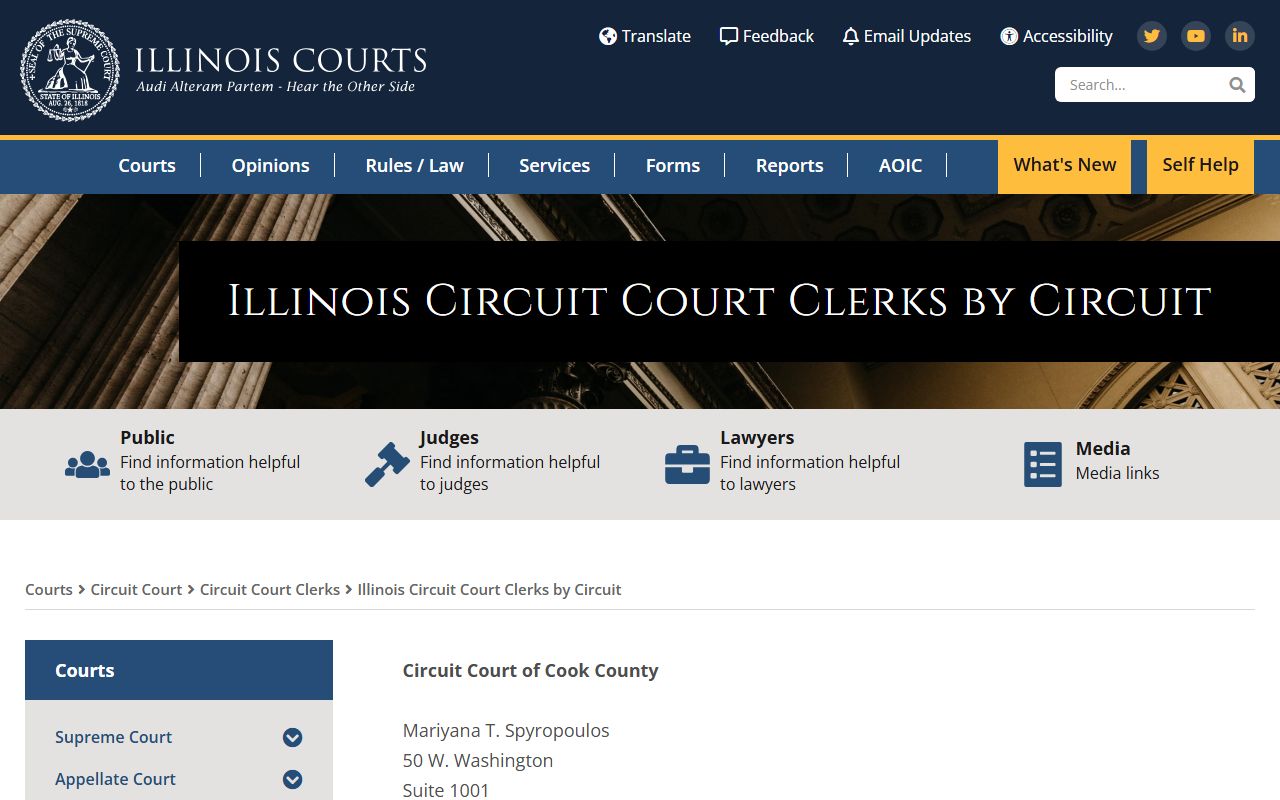
The circuit clerks directory sorted by district and circuit helps you locate the right office quickly. Illinois has 24 judicial circuits, and knowing which circuit covers a county can speed up your search.
The IDPH vital records office also covers dissolutions tied to civil unions, which Illinois began recognizing in 2011 before same-sex marriage became legal statewide.
Illinois Vital Records and Divorce Filings
The IDPH vital records portal covers all vital records categories. Divorce verifications fall under dissolution of marriage records. The portal explains what each category covers and links to the relevant application forms. For dissolution records, the key form is the Application for Verification of Dissolution of Marriage/Civil Union Record Files. It asks for the names of both parties, their dates of birth, and the date and place the divorce was granted. This form plus $5 and a valid ID is all you need to submit a verification request by mail.
The IDPH also handles civil union dissolutions under the same process. Illinois recognized civil unions starting in 2011. Dissolutions of civil unions after that date are indexed the same way as marriages. Verifications for civil union dissolutions also cost $5 and go through the same office.
Note: A state verification is not a certified divorce decree and will not work for most legal purposes. Legal name changes, remarriage documentation, and property transfers often require the certified court order from the county clerk, not the IDPH verification.
Browse Illinois Divorce Records by Location
Illinois divorce records are held at the county level. Select a county to find the circuit clerk contact information, local fees, and search options for that area. Major cities are also listed with details on which county courthouse handles divorce filings for residents of that city.
Illinois Counties
Each of Illinois's 102 counties has its own Circuit Court Clerk who maintains all divorce records filed in that county. Browse the largest counties below or view the full list.
Major Illinois Cities
Cities in Illinois do not maintain divorce records directly. All filings go through the county circuit court. Select a city to learn which county handles divorce cases for that area and how to access those records.