
Shelby County Divorce Records Lookup
Shelby County divorce records are maintained by the Circuit Court Clerk in Shelbyville and cover every dissolution of marriage case decided in this county. This page explains where to find those records, how to request copies, and what state resources are available to confirm divorce information for Shelby County cases.
Shelby County at a Glance
The Shelby County Circuit Court Clerk
Divorce records in Shelby County are the responsibility of the Circuit Court Clerk in Shelbyville. This office opens and maintains a case file for every dissolution of marriage petition filed in the county. The file tracks the case from start to finish and includes all paperwork exchanged between the parties, all orders the judge signs, and finally the judgment of dissolution that ends the marriage. After the case closes, the file remains in the clerk's custody as part of the permanent court record.
The clerk's direct phone number is (217) 774-4212. Calling is a good first step when you need to know if a divorce was filed in Shelby County. Staff can search the case index by name and give you a case number if a record exists. Once you have a case number, the rest of the process moves more quickly because staff can locate the exact file without any ambiguity.
For the current mailing address and hours for the Shelby County clerk, check the Illinois Courts circuit clerk directory. This statewide directory is kept up to date by the Illinois Supreme Court and lists every circuit court clerk in the state. Shelby County is part of the 4th Judicial Circuit, which covers central Illinois counties.
Note: Walk-in access to the courthouse is the quickest way to review a file, but it is wise to call ahead during periods when court schedules may affect clerk office availability.
Searching for Divorce Records
Shelby County does not operate a public online case search system. Record searches must be done through the clerk's office, either in person, by phone, or by mail. Each method works, but in-person visits give you the most immediate access to case files. You can review documents on-site, identify what you need, and request copies all in a single visit.
When you contact the clerk by phone, be ready with the full names of both spouses and the approximate year the divorce may have been filed. Maiden names matter, especially for the party who was listed under a different name at the time of filing. Staff can often locate a case with just names and a general date range, but more specific information means a faster search.
Mail requests take longer but work well when visiting Shelbyville in person is not practical. Write to the Circuit Court Clerk in Shelbyville and include full names, dates if known, and what specific documents you need. Include payment for copy fees, though it is worth calling first to confirm the current rates. Enclose a self-addressed stamped envelope so the clerk can return documents or invoices to you directly.
Contents of Divorce Court Files
A complete Shelby County divorce file is a record of the entire legal process. It begins with the petition for dissolution, which is the document that starts the case. The petition names both parties, identifies any children of the marriage, describes the marital property, and asks the court for specific relief. The responding party's answer, or in some cases a counterpetition, comes next.
During the case, both parties typically file financial affidavits. These disclose income, expenses, assets, and debts. The court uses these documents to make decisions about property division and support. Any orders the judge signs during the case are part of the file, as are transcripts of hearings if they were recorded. The case ends with the judgment of dissolution, sometimes also called the divorce decree. If children are involved, a parenting plan is entered at the same time.
Illinois courts follow the Illinois Marriage and Dissolution of Marriage Act (750 ILCS 5) in every divorce case. This statute sets out the required findings a court must make before granting a dissolution, which is why divorce files across the state tend to have a consistent structure even when the underlying facts of each case differ significantly.
Note: Contested divorces produce more documentation than uncontested ones, which can make a contested case file quite large.
IDPH Statewide Divorce Records
The Illinois Department of Public Health operates a statewide divorce index that dates back to 1962. This index is separate from the Shelby County court files. If you need a quick check on whether a divorce occurred in Illinois, and you are not sure which county handled the case, the IDPH search is a good starting point. They charge $5 per search and process requests by mail, with an average turnaround of four to six weeks.
What you get from the IDPH is a verification letter, not a certified copy of the judgment. A verification confirms the basic facts: names, date granted, and county. That is enough for many purposes. But if you need the actual decree for legal or financial reasons, you must go through the Shelby County Circuit Court Clerk for a certified copy.
The IDPH vital records office can be reached at (217) 782-6553. Request forms are on their dissolution of marriage records page. All requests must include a copy of a valid government-issued photo ID.
Illinois Statutes Governing Divorce Records
Two key statutes shape how Illinois divorce records are created and accessed. The first is the Illinois Marriage and Dissolution of Marriage Act, found at 750 ILCS 5. This law controls everything about how divorces are handled in Illinois courts, from the grounds required to the documents that must be filed. The second is the Vital Records Act (410 ILCS 535), which governs the IDPH's role in collecting and providing access to divorce data.
Together these statutes create a two-track system. The court side gives you access to the full file. The IDPH side gives you summary information. Both are grounded in Illinois law and both are legitimate sources for divorce records. Knowing which one you need depends on what you are trying to do with the information.
The Illinois statutes page for the Marriage and Dissolution of Marriage Act shows the current text of 750 ILCS 5, which governs all Illinois divorce proceedings.
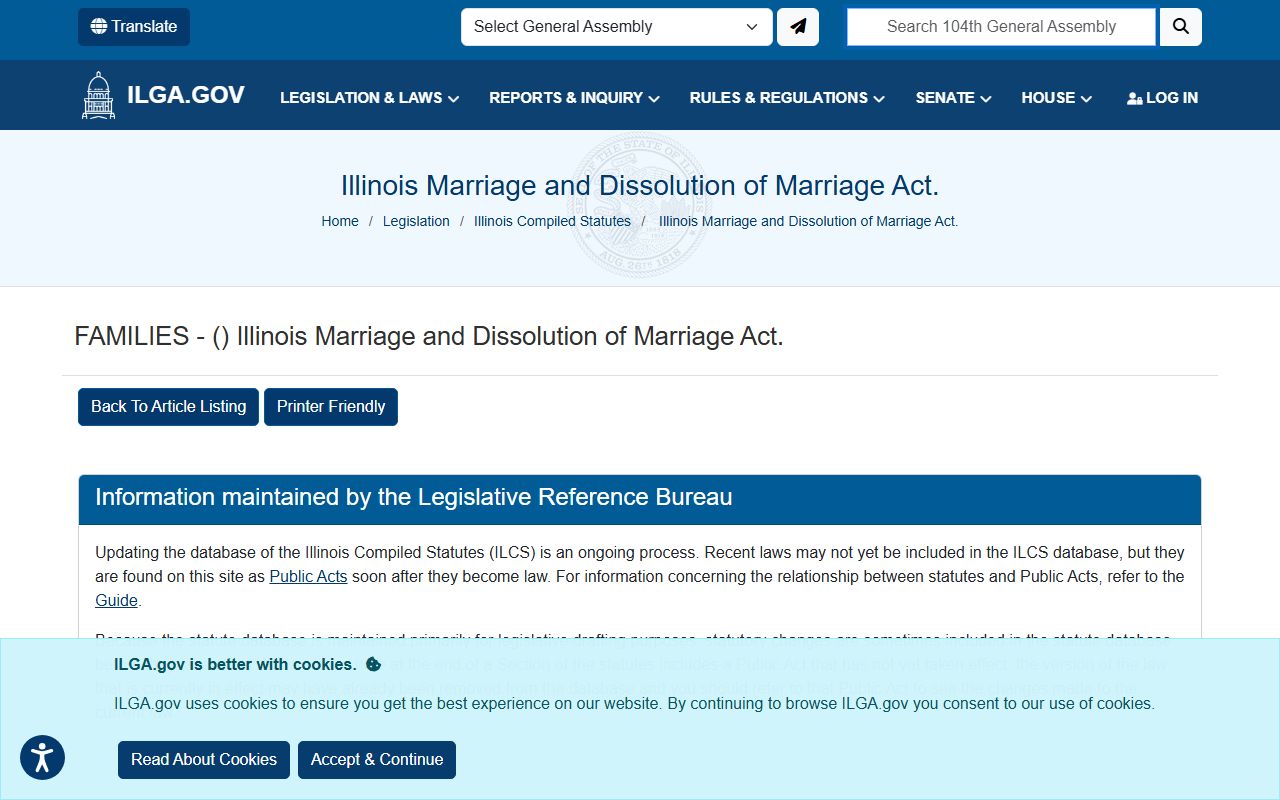
Reviewing the statute can help you understand what a Shelby County court was required to decide before granting a dissolution.
Historical Records and Genealogy
Shelby County divorce records going back to the county's founding are part of the courthouse's historical collection. For cases from before 1962, the courthouse in Shelbyville is the primary source, though some older records may have been transferred to the Illinois State Archives. You can search the Archives catalog at illinois.gov/ihpa/Archives.
The Illinois State Genealogical Society is a useful resource for researching older Shelby County records, including marriage and divorce documents from the 1800s. Local libraries and the Shelby County historical society may also have indexes or microfilm copies of old court records that can help narrow a genealogical search.
Legal Assistance in Shelby County
Central Illinois residents, including those in Shelby County, can contact Prairie State Legal Services for free or low-cost legal help with civil matters including family law. For those who can afford an attorney, the Illinois State Bar Association's lawyer referral program connects people with local practitioners. Many family law attorneys offer an initial consultation at a reduced rate or free of charge.
The Illinois Courts website provides downloadable forms for dissolution of marriage cases. Using official forms is strongly recommended, as they are designed to meet the specific requirements of Illinois courts and reduce the chance of having paperwork rejected for technical deficiencies.
Neighboring Counties
Divorces sometimes cross county lines when couples live near a border. If you think a case may have been filed in an adjacent county, check these neighboring clerks: