
Moultrie County Divorce Records
Moultrie County divorce records are kept by the Circuit Court Clerk in Sullivan, the county seat in east-central Illinois. The county operates under the 6th Judicial Circuit, which covers several nearby counties in this part of the state. Divorces granted in Moultrie County are processed through the Sullivan courthouse, and the Illinois Department of Public Health also holds a statewide divorce index that covers records back to 1962.
Moultrie County At a Glance
Clerk's Office in Sullivan
The Moultrie County Circuit Court Clerk in Sullivan holds all divorce records for the county. Call 217/728-4622 to confirm whether a particular case is on file. Have both parties' names and the approximate year ready when you call. The clerk can tell you what documents are available, what it costs for copies, and how to submit your request whether by mail, in person, or by phone. The office handles a manageable caseload given the county's size, and staff are generally accessible for routine records requests.
For the clerk's mailing address, the Illinois Courts circuit court clerk directory has current contact details for every county in Illinois. Check that page before sending a mail request so you have the correct address on file. The directory is maintained by the state court system and is reliable for all 102 Illinois counties.
Sullivan is a small town in the heart of east-central Illinois. The courthouse handles all civil, criminal, and family law cases for the county. Divorce records are available to the public on request, and there is no requirement to demonstrate a personal interest in the record to obtain a copy.
Note: Bring government-issued photo ID when visiting the clerk's office in person. Include a copy of your ID with any mail request.
What to Expect from the Record
The central document in a Moultrie County divorce case is the final decree of dissolution of marriage. This is what the judge signs to officially end the marriage. It includes the names of both spouses, the date of the divorce, and the court's orders on all contested issues. In an uncontested divorce, the decree may be fairly brief. In a contested case that went to trial, the decree can be more detailed and may reference exhibits or separate settlement agreements.
If children were involved, the decree or a related parenting plan sets out custody, visitation, and child support. Property and debt division is usually addressed directly in the decree or in a marital settlement agreement that is attached to it. You can request the full case file or just specific documents within it. The clerk will give you a cost estimate based on what you ask for.
Certified copies of the final decree are the documents most often needed for legal purposes. These carry the court's seal. Plain copies are less expensive and work fine for personal use or informal verification. If you are not sure which type you need, explain your situation to the clerk and they can often point you in the right direction.
Illinois Department of Public Health Option
If you do not need the full court file and only want to confirm a divorce happened in Illinois, the Illinois Department of Public Health offers a $5 verification service. IDPH maintains a statewide index of divorces from 1962 to the present. Their response is a letter confirming the basic facts: the names of the parties, the year, and the county. It is not a copy of the court decree and does not include the terms of the divorce.
To request an IDPH verification, mail the request form along with a copy of valid government-issued ID to IDPH in Springfield. Acceptable ID types are listed on the IDPH valid ID page. Response time by mail is typically 4 to 6 weeks. Reach IDPH by phone at (217) 782-6553 for questions about the process.
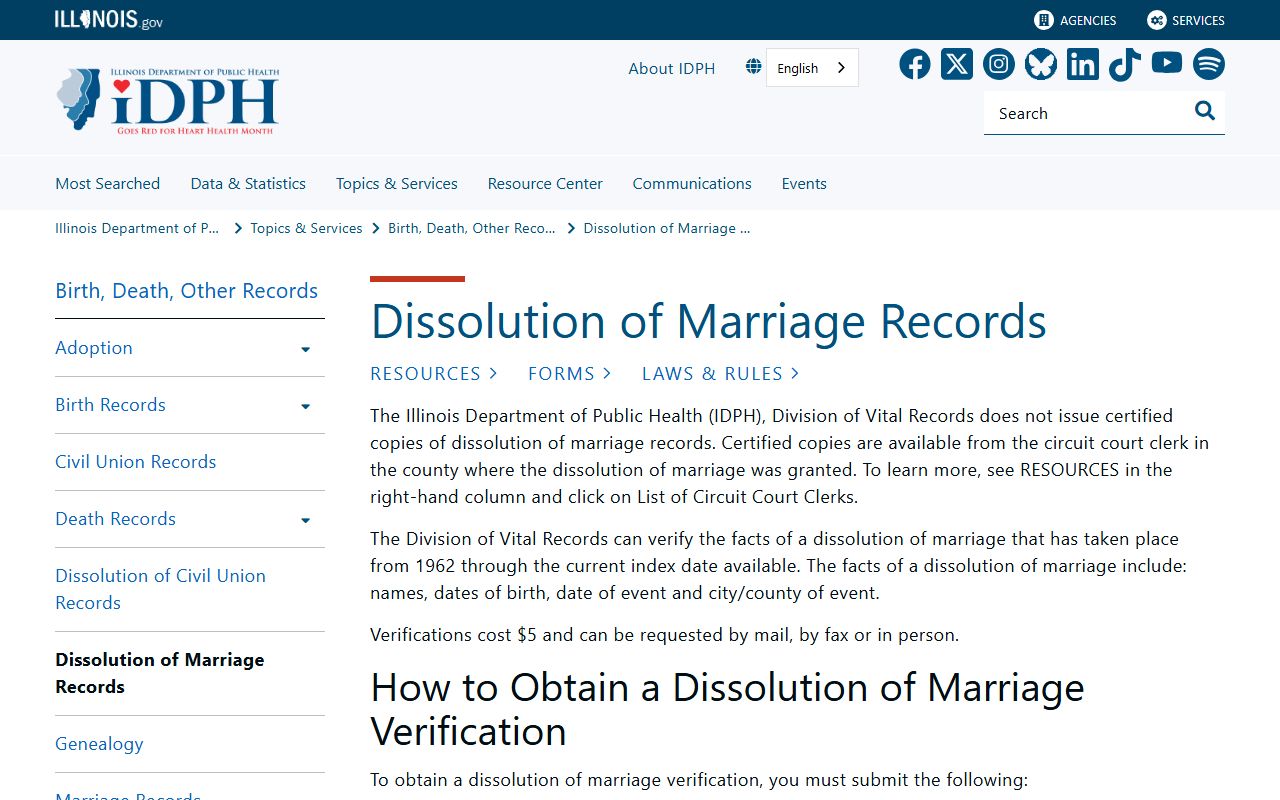
The IDPH dissolution of marriage page describes the $5 verification service and explains exactly what the response letter includes.
Illinois Statutes on Divorce and Records
Every divorce granted in Moultrie County is processed under the Illinois Marriage and Dissolution of Marriage Act, 750 ILCS 5. This statute sets the rules for where divorces can be filed, what grounds are recognized, and how the court handles all issues from property to children. Illinois became a no-fault only state in 2016. Courts no longer hear arguments about which spouse is to blame for the breakdown of the marriage.
The Vital Records Act, 410 ILCS 535, controls how Illinois vital records, including divorce records, are maintained and accessed. The law presumes public access. Unless a court has specifically restricted a file, anyone can request and receive copies of divorce records from the circuit court clerk.
Genealogy and Historical Records
For divorce records from the early 20th century or earlier, the Moultrie County courthouse may no longer hold the original files. The Illinois State Archives at (217) 782-4682 and at illinois.gov/ihpa/Archives is the place to look for records that have been transferred out of county custody. The archives staff can tell you whether they have a particular record or whether you should still try the county clerk first.
The Illinois State Genealogical Society has indexes and guides for Illinois family history research. If you are working on a genealogy project that involves Moultrie County or the surrounding area of east-central Illinois, their resources can help narrow down which court and which year to focus on.
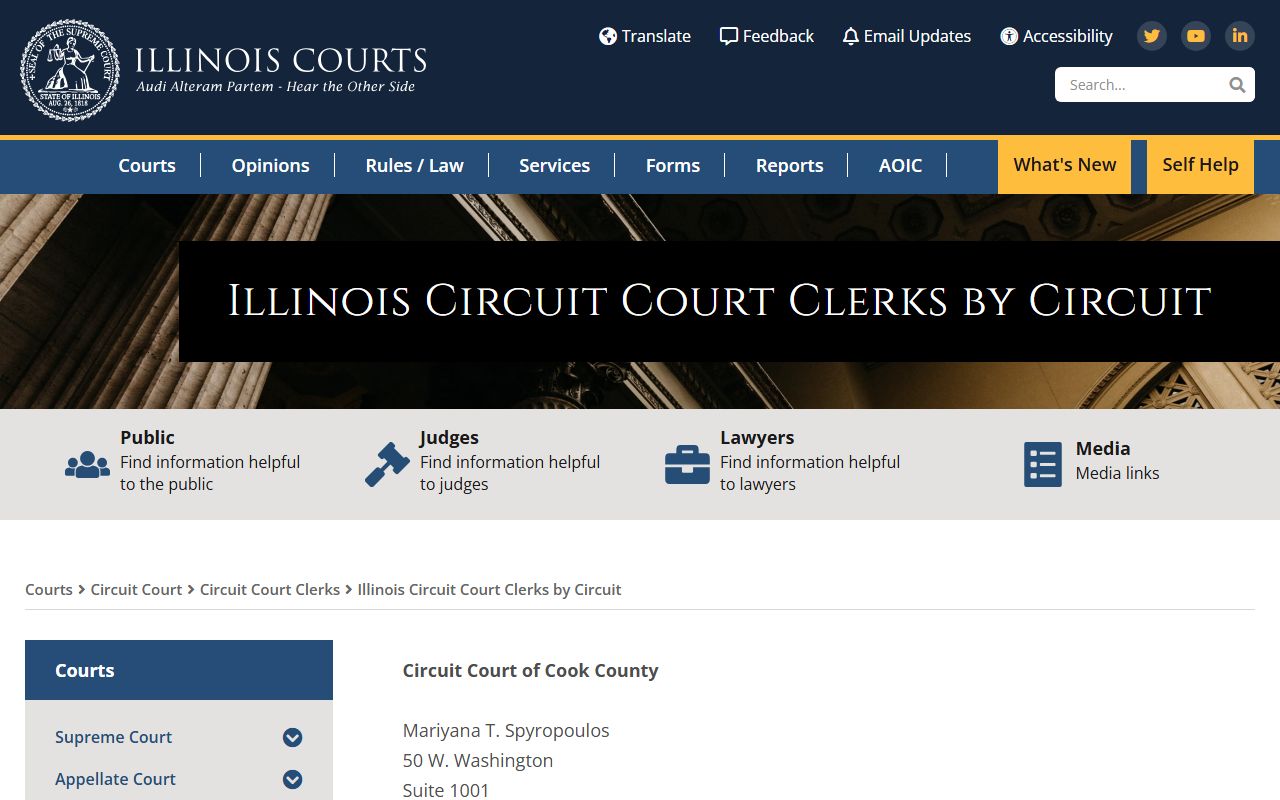
The Illinois Courts listing by district and circuit helps identify which clerk's office handles divorce records for Moultrie County and neighboring counties.
Submitting Your Request
Call 217/728-4622 first to confirm the record is on file. The clerk will let you know the fee and whether you need to submit a written request or can give your information over the phone. For in-person visits, go to the Sullivan courthouse during regular business hours and bring your ID. Copies are often available the same day for straightforward requests.
Mail requests take longer, but they work well when you cannot make the trip. Write out the names of both parties, the approximate year of the divorce, and what documents you need. Include your ID copy and payment, and add a self-addressed stamped envelope so the clerk can return the copies efficiently.
Nearby Counties
Moultrie County is surrounded by several east-central Illinois counties. Neighboring courts include Macon County, Shelby County, Effingham County, Douglas County, Piatt County, and De Witt County. If you are unsure which county handled a specific divorce, any of those clerks can help or redirect you.