
Access Brown County Divorce Records
Brown County divorce records are held by the 8th Judicial Circuit Court Clerk in Mt. Sterling, Illinois. Whether you need a certified decree, want to confirm a past dissolution of marriage, or are researching case history in this small west-central Illinois county, this page outlines what sources are available and how to reach them.
County at a Glance
Brown County Circuit Court Clerk
The circuit court clerk's office in Mt. Sterling is where all Brown County divorce records are stored and maintained. The clerk holds everything the court generated during a dissolution of marriage case, including the initial petition, any motions, temporary or interim orders, required financial disclosures, and the final judgment of dissolution. Cases involving children also include parenting plans and support orders. This office is the official custodian of these records.
Call the clerk at 217/773-2713. When you reach the office, have the names of both parties and the approximate year the case was filed. That is enough to start a search. If you have a case number, that makes things faster. Bring a valid government-issued photo ID if you visit in person. The Illinois Courts circuit clerk directory can also confirm contact information and may list current office hours for Brown County.
Certified copies are what you need for legal or official uses. They carry the court seal. Plain copies are less expensive and work for personal research or reference. Ask the clerk which type you need before paying.
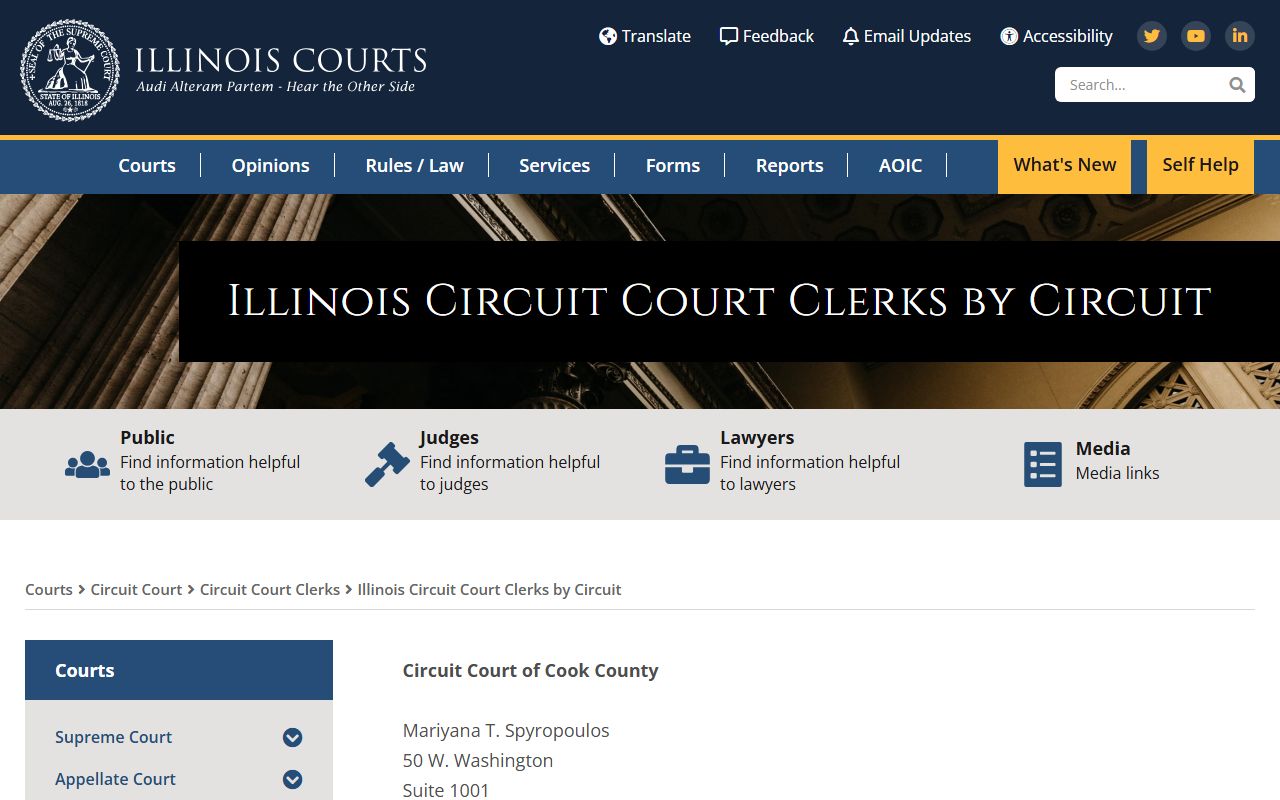
The Illinois Courts directory provides clerk contact details for all 102 counties, including Brown County in the 8th Judicial Circuit.
Note: Brown County is one of Illinois's smaller counties. The clerk's office may have limited hours or staff. Calling ahead before your visit is strongly recommended.
IDPH State-Level Records
The Illinois Department of Public Health maintains a statewide index of divorce records from 1962 to the present. This is a separate system from the county court records. IDPH does not provide full case files or certified copies of decrees. What you get from IDPH is a certificate confirming that a dissolution of marriage occurred in Illinois, the names of the parties, and when and where it was granted. For many official purposes, this is sufficient.
Mail your request to IDPH at 925 E. Ridgely Ave., Springfield, IL 62702. You can also call (217) 782-6553. The fee is $5 per search. Include your completed request form and a copy of a valid government-issued photo ID. The IDPH valid ID page shows which identification documents IDPH accepts. Processing by mail typically takes four to six weeks. The fee is charged whether or not the record is found.
For more detail on the IDPH process, including how to request records for a deceased person or for genealogical research, see the IDPH dissolution of marriage records page.
Documents in a Divorce Case File
Brown County divorce files hold whatever the court generated while processing the case. A short, uncontested divorce may produce only a handful of documents. A contested case can result in a much larger file. Standard documents include the petition for dissolution, the other party's response or default entry, motions filed during the case, any temporary or interim orders the judge issued, mandatory financial disclosures, and the final judgment of dissolution.
The final judgment is the most frequently requested document. It names both parties, records the date of the divorce, and sets out the terms for property division and any support. When children were involved, the judgment incorporates or references the parenting plan. Illinois courts follow the Illinois Marriage and Dissolution of Marriage Act, 750 ILCS 5 when issuing these judgments. That statute applies uniformly across the state, so the legal framework is the same whether the case was filed in Mt. Sterling or any other Illinois county seat.
Requesting Records
The clerk's office in Mt. Sterling handles both in-person and mail requests for Brown County divorce records. In person is usually faster. Visit during business hours, bring your ID, and give staff the case information you have. They will search and tell you what is available and what it costs. Call 217/773-2713 before you go to confirm hours and payment options, since smaller county offices sometimes have limited schedules.
For mail requests, write a letter with the names of both parties, the approximate filing year, the type of copy you need, your contact information, and a copy of your ID. Include a check or money order payable to the Brown County Circuit Clerk. Do not send cash. Ask the clerk by phone for the correct mailing address before you send anything, as the physical address for mail may differ from the courthouse location. Mail responses can take one to three weeks depending on current workload.
Note: Given Brown County's small size, the clerk may process requests less frequently than larger county offices. Plan for some extra time if mailing.
Illinois Law Governing Divorce Records
Two statutes shape how divorce records are created and accessed in Brown County. The Illinois Marriage and Dissolution of Marriage Act, 750 ILCS 5, sets the substantive rules courts apply in divorce proceedings, from how property is divided to how parenting responsibilities are assigned. The Vital Records Act, 410 ILCS 535, authorizes IDPH to collect and maintain statewide records and controls access to that data.
Illinois divorce records are public by default. A judge can restrict access to specific documents in a case, but full sealing of a divorce file is uncommon. If a file is sealed, the clerk's office will tell you so when you make your request. Brown County is part of the 8th Judicial Circuit, which also includes Adams, Calhoun, Cass, Mason, McDonough, and Schuyler counties.
Older Records
For divorces that occurred before 1962, IDPH does not hold records. Older cases are either still with the circuit clerk in Mt. Sterling or have been transferred to the Illinois State Archives in Springfield. Call the archives at (217) 782-4682 or visit illinois.gov/ihpa/Archives to inquire about historical Brown County records.
The Illinois State Genealogical Society at ilgensoc.org is a helpful resource for older family history research. Their guides cover county-level records across Illinois and can help you locate materials that have not been digitized. Because Brown County is small and rural, some older records may only exist in handwritten ledger form at the courthouse.
Nearby Counties
Brown County is surrounded by other west-central Illinois counties, each maintaining its own divorce records through the circuit court clerk.