
Warren County Divorce Records Search
Warren County divorce records are on file with the Circuit Court Clerk in Monmouth and include all dissolution of marriage cases handled by the county's courts. This page explains how to search those records, what they typically contain, and how to use both the local clerk's office and state-level resources to get the information you need.
Warren County at a Glance
Warren County Circuit Court Clerk
The Circuit Court Clerk in Monmouth is the official custodian of divorce records for Warren County. Illinois law requires that every civil court filing, including petitions for dissolution of marriage, be maintained by the circuit court clerk of the county where the case was filed. When a divorce case comes through the Warren County courthouse, the clerk opens a file, logs every document that gets filed, and keeps the complete record after the case ends. That record is part of the public archives and remains accessible to anyone with a legitimate need to review it.
Reach the clerk at (309) 734-5179. A phone call to this number is often the fastest first step. Staff can search the case index by party names, confirm whether a record exists, and give you the case number. With that information in hand, subsequent steps, whether an in-person visit or a mail request, become much simpler because you are working with a specific case rather than doing an open-ended search.
For current mailing address and office hours, check the Illinois Courts circuit clerk directory. This directory is managed by the Illinois Supreme Court and is kept current. Warren County sits in the 9th Judicial Circuit, which covers several counties in western Illinois.
Ways to Access Warren County Divorce Records
There is no public online search system for Warren County court records. Access goes through the clerk's office by phone, in person, or mail. Each method has its own advantages depending on your situation.
Visiting the courthouse in Monmouth is the most straightforward approach. You show up, provide the party names, and staff will locate the case in their index. Public records are available for review on-site, and you can identify exactly which documents you need before paying for copies. Bring a photo ID. Copy fees vary by page count and document type, and the clerk can tell you the current rates when you visit.
By phone, you can confirm a case exists and get the case number without leaving home. That alone is useful. If the case is confirmed, you can then decide whether to visit in person or send a mail request for specific documents. The phone approach also works well if you are unsure whether the divorce was filed in Warren County at all, since you can call without committing to a trip.
Mail requests are practical when you already know the case number and just need copies sent to you. Write a clear letter to the clerk's office in Monmouth. Include both party names, the case number if you have it, and the specific documents you want. Enclose a check or money order for the copy fees and a self-addressed stamped envelope. Call ahead to confirm current copy costs before sending payment.
Note: Mail processing times can run two to four weeks, so plan ahead if you need records for a time-sensitive legal matter.
What Warren County Divorce Files Contain
Warren County divorce files contain every document generated by the court process. The petition for dissolution of marriage starts the file. It names both parties, describes the marriage, identifies any children, and sets out what the petitioner is asking the court to decide. After that comes the summons issued to the other party and proof that it was served. The other party's response or counterpetition follows.
Financial affidavits are a required part of Illinois divorce proceedings under the Illinois Marriage and Dissolution of Marriage Act (750 ILCS 5). Both parties file these documents to disclose their financial situation. The court uses them when making decisions about property and support. Any temporary orders, hearing transcripts, and settlement agreements become part of the file as the case moves forward.
The file closes when the judge enters the judgment of dissolution of marriage. This is the core document most people are looking for. It reflects the final decisions on all issues the court addressed: property division, maintenance if any was ordered, and if children were involved, the allocation of parental responsibilities and parenting time. Parenting plans are attached to the judgment in cases involving minor children.
Using IDPH to Verify a Warren County Divorce
The Illinois Department of Public Health maintains a statewide index of divorces granted in Illinois since 1962. If you are not sure which county filed the divorce or just need a basic confirmation that a dissolution occurred, the IDPH search is a good place to start. They will check their index for a $5 fee and send you a verification letter by mail. Turnaround is generally four to six weeks.
The IDPH verification confirms whether a divorce was granted, the names of the parties, the date, and the county. It is not a certified copy of the court record, so it will not work for legal proceedings that require the actual judgment of dissolution. For those situations, you need to request a certified copy from the Warren County Circuit Court Clerk.
Contact IDPH at (217) 782-6553 or use their online request page. Every IDPH request must include a copy of a valid government-issued photo ID.
The Illinois circuit court clerks directory, maintained by the Illinois Supreme Court, provides accurate contact information for the Warren County clerk and all counties statewide.
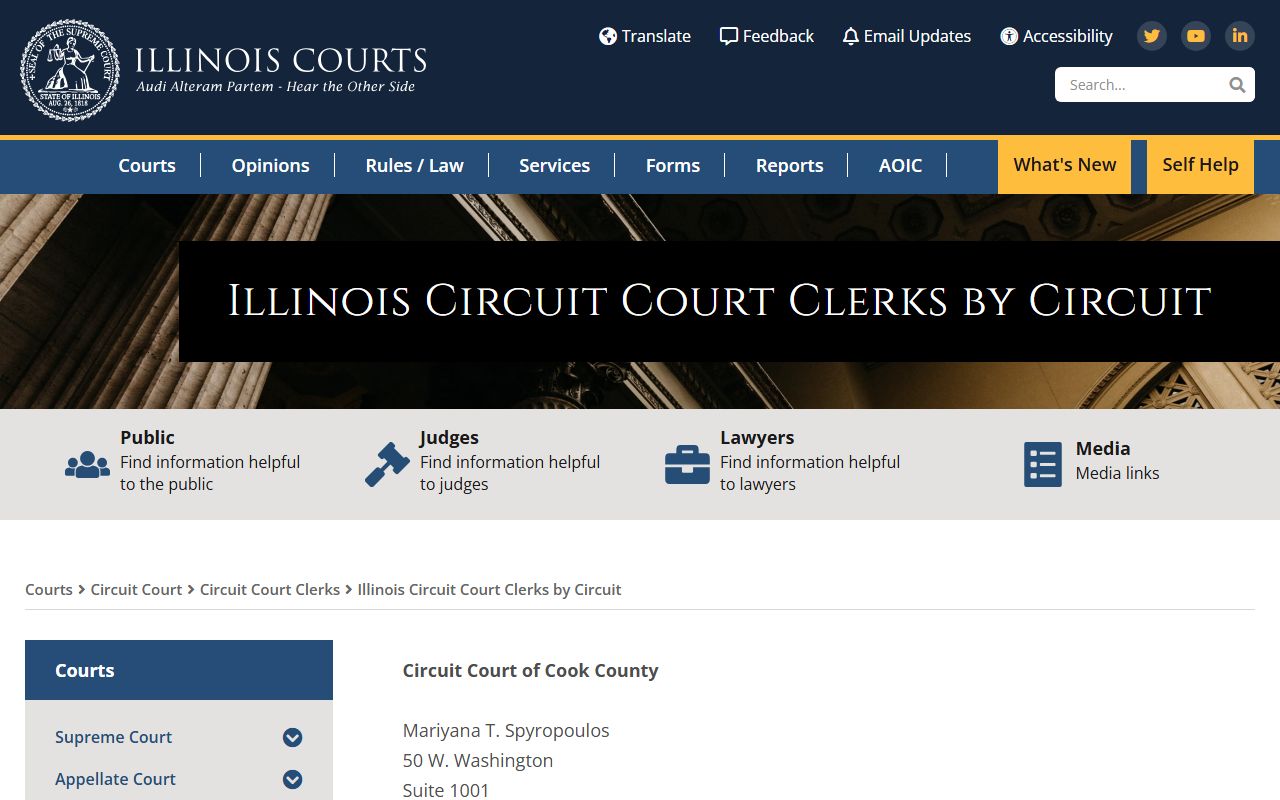
Warren County is part of the 9th Circuit. Use this directory to find the clerk's current address before sending a mail request.
Illinois Law on Divorce Record Access
Illinois law treats divorce records as public documents. The Vital Records Act (410 ILCS 535) governs what the IDPH keeps and shares. Court-side records fall under the Illinois Marriage and Dissolution of Marriage Act and Illinois Supreme Court rules. Under these frameworks, divorce records are presumptively open to the public unless a judge has specifically restricted access.
Restrictions happen, but they are the exception rather than the rule. A court might seal financial documents that contain Social Security numbers, or redact information about minor children. In rare cases, an entire file might be sealed by court order. When you request a record and part of it is withheld, the clerk will explain why and what next steps are available to you. For most routine searches of Warren County divorce records, you will find the full file is available.
Historical and Genealogy Records
Warren County has kept court records since its founding in the early 19th century. Older divorce files, particularly those from before the IDPH index began in 1962, are held at the courthouse in Monmouth or may have been transferred to the Illinois State Archives. Check the Archives catalog at illinois.gov/ihpa/Archives for what may be available from Warren County. The Illinois State Genealogical Society can also help with older records research, including county-specific indexes and microfilm resources.
Legal Help in Warren County
Prairie State Legal Services covers Warren County and much of western Illinois, offering free or reduced-cost civil legal help to those who qualify. Their services include family law matters. For attorney referrals, the Illinois State Bar Association maintains a lawyer referral program. Official Illinois court forms for dissolution of marriage are free to download on the Illinois Courts website, which is helpful if you are handling a matter without an attorney.
Neighboring Counties
If you are not certain whether a divorce was filed in Warren County or a neighboring county, contact these circuit court clerks: