
Monroe County Divorce Records
Monroe County divorce records are held by the 20th Judicial Circuit Court Clerk in Waterloo, Illinois. Whether you need a certified copy of a final decree, want to look up a past dissolution case, or need to confirm that a marriage ended, this page covers how the county handles these records and what state-level resources can help you find what you need.
County at a Glance
The Circuit Court Clerk in Waterloo
All divorce filings in Monroe County go through the 20th Judicial Circuit Court Clerk's office at 100 South Main Street, Room 115 in Waterloo. Lisa Fallon serves as circuit clerk. The office stores every dissolution of marriage case filed in the county, along with petitions, motions, property agreements, parenting plans, and final decrees. If you need divorce documents from Monroe County, this office is your first stop.
Call the clerk at 618/939-8681 or send a fax to 618/939-1929. If you visit in person, bring a valid photo ID and whatever case details you have. That means the approximate year the case was filed and the full names of both parties. Staff can search by name or by case number. The clerk's website at monroecountyil.gov may post hours, request forms, and current fees. Check there before your visit to save time.
Certified copies carry the court seal and are needed for legal matters like remarriage applications or name changes. Plain copies cost less and work well for personal research. Ask staff which type you need so you pay the right amount.
The Illinois Courts directory lists circuit court clerks across the state, including the 20th Judicial Circuit serving Monroe County.
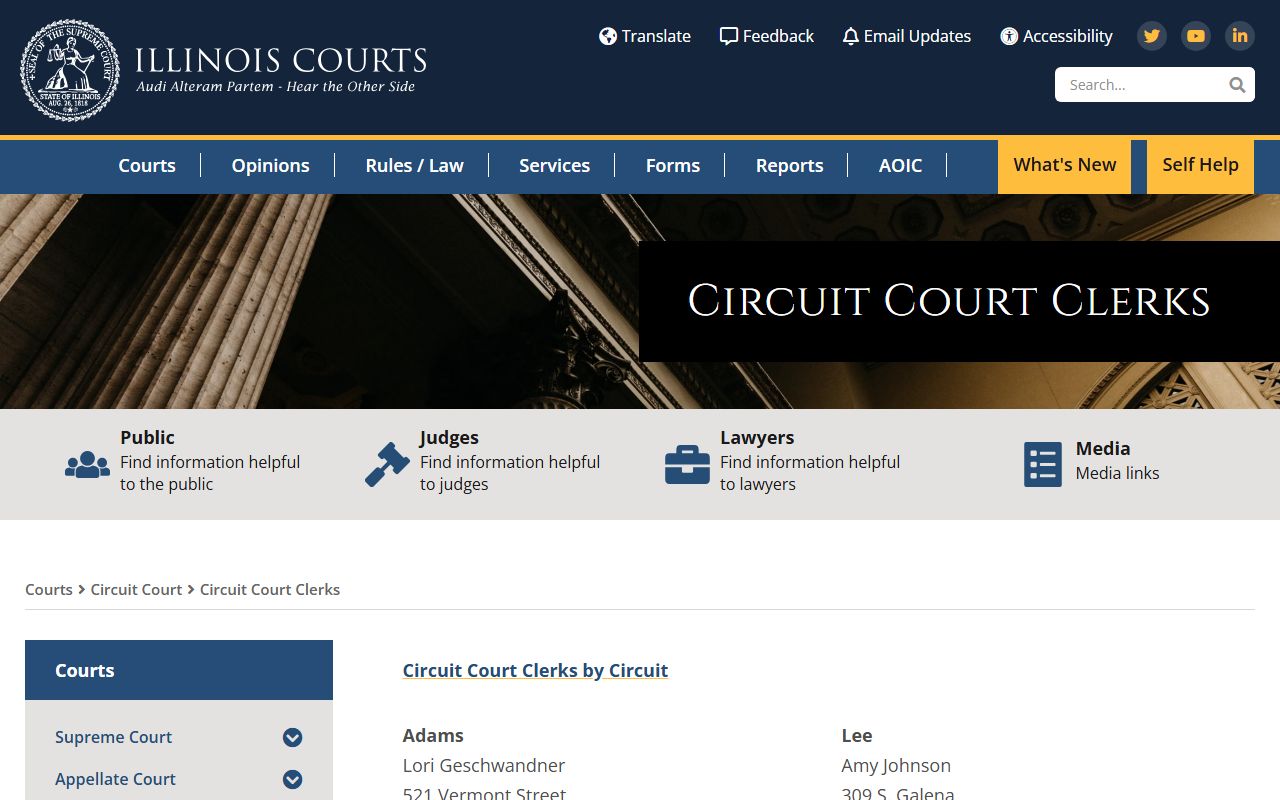
Note: If the clerk's office is closed when you call, the Illinois Courts website lists contact details for all circuit clerks and may have updated hours.
Getting Records From the State Level
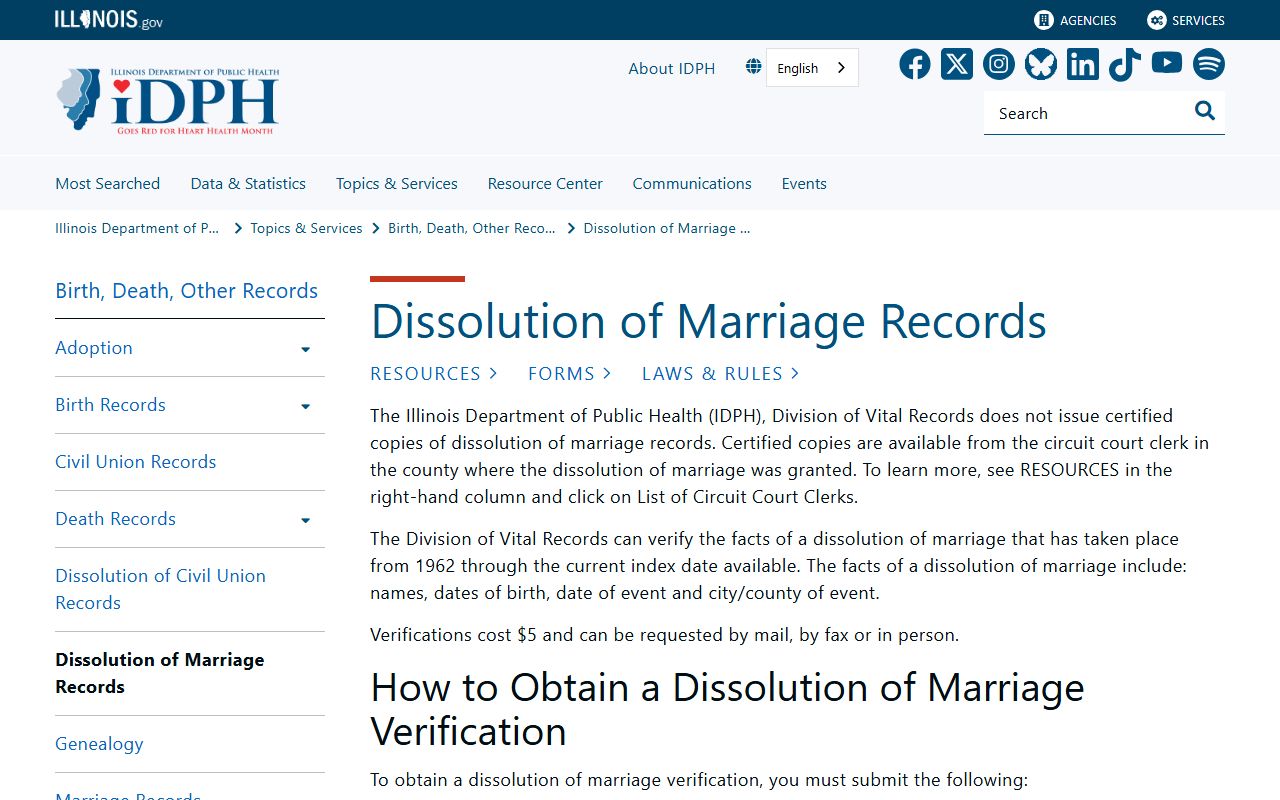
The Illinois Department of Public Health keeps a statewide index of divorce records going back to 1962. IDPH does not provide full case files, but it does issue certificates that confirm a dissolution of marriage happened. These certificates work for many official purposes, including passport applications and insurance updates. The address is 925 E. Ridgely Ave., Springfield, IL 62702, and the main phone line is (217) 782-6553.
Requests go by mail or in person at the Springfield office. You need a completed request form and a copy of a valid government-issued photo ID. IDPH accepts driver's licenses, state ID cards, and passports. The agency publishes a list of acceptable ID types on its website. Processing takes roughly four to six weeks by mail. The fee is $5 per search. If the record is found, IDPH sends you a certified certificate. If it is not found, you still pay the search fee, so have the filing details correct before you submit.
For more detail on what IDPH requires and what you can expect to receive, visit the IDPH dissolution of marriage records page. That page also explains how to request records for someone other than yourself and what happens when older records are hard to locate.
The IDPH vital records page covers how to request dissolution of marriage certificates from the state office in Springfield.
What Divorce Records Contain
A divorce case file in Monroe County can hold a lot of documents depending on how complex the case was. Simple, uncontested divorces produce fewer papers. Cases with children or property disputes create bigger files. Most files include a petition for dissolution, the other party's response, any temporary orders the judge issued, financial disclosures, and the final decree. If custody or support was at issue, those agreements are usually attached to the decree.
The final decree is the document most people need. It names both parties, gives the date the court granted the divorce, and spells out any terms for property division, spousal support, or parenting arrangements. Courts in Illinois are required to follow the Illinois Marriage and Dissolution of Marriage Act when issuing decrees, so the structure of these documents is fairly standard across the state.
Note: If a case was sealed by the court, some or all documents may not be available to the public. Ask the clerk whether access restrictions apply before you make a trip to the courthouse.
Mail Requests and In-Person Visits
Monroe County's circuit clerk accepts requests in person at the Waterloo courthouse. Walk in during business hours, present your ID, and tell staff what you are looking for. They will search the system and tell you what is available and what it will cost. Payment methods vary by county, so call ahead if you plan to pay by credit card rather than cash or check.
Mail requests are also an option for most counties in Illinois, but Monroe County's clerk is the best source for current instructions. When mailing, include a written request with the names of the parties, the approximate year of filing, a copy of your ID, and a check or money order for the fees. Do not send cash. Address your envelope to the clerk's office at 100 South Main Street, Room 115, Waterloo, IL 62298. Allow extra time for mail requests. Processing can take anywhere from a few days to a few weeks depending on how busy the office is.
The clerk's website at monroecountyil.gov may have downloadable request forms. Using the official form, if one is available, can speed things up.
The Illinois Marriage and Dissolution of Marriage Act
Illinois divorce law falls under the Illinois Marriage and Dissolution of Marriage Act, 750 ILCS 5. This law sets out the rules courts must follow when granting a divorce in the state. It covers residency requirements, grounds for dissolution, property division, spousal maintenance, and child custody. Monroe County courts apply this law just like every other county in Illinois.
The Vital Records Act, 410 ILCS 535, governs how the state collects and stores vital records data, which includes divorce records. This law gives IDPH the authority to maintain the statewide index and sets rules for who can access those records and under what conditions. Both laws together shape how records are created, stored, and released in Illinois.
Note: You can read both statutes in full on the Illinois General Assembly website at ilga.gov.
Older and Historical Records
Monroe County has a long history, and divorce records go back well before the IDPH index started in 1962. Records from earlier decades are held either in the circuit clerk's office or at the Illinois State Archives. The archives, reachable at (217) 782-4682, hold many older court records that have been transferred out of active county storage. The Illinois State Historical Preservation Agency website at illinois.gov/ihpa/Archives has guidance on how to request older materials.
Genealogists looking for pre-1962 divorces often turn to the Illinois State Genealogical Society at ilgensoc.org. The society maintains resources and research guides that can point you toward county-level records that may not be indexed online. For records dating back to the 1800s, county circuit clerk offices sometimes hold original ledgers and index books that have not been digitized.
Nearby Counties
Monroe County borders several other Illinois counties. Each has its own circuit clerk handling divorce records for that jurisdiction.